
A fresh perspective on cosmetics
Thank you to a recent LinkedIn post from marketing strategist Alex M H Smith and his excellent insight into brand strategy.
Smith often posts about the strategic decisions that make brands successful. Recently he singled out UK-based cosmetics brand Lush to illustrate a concept he calls “cross-category copying.”
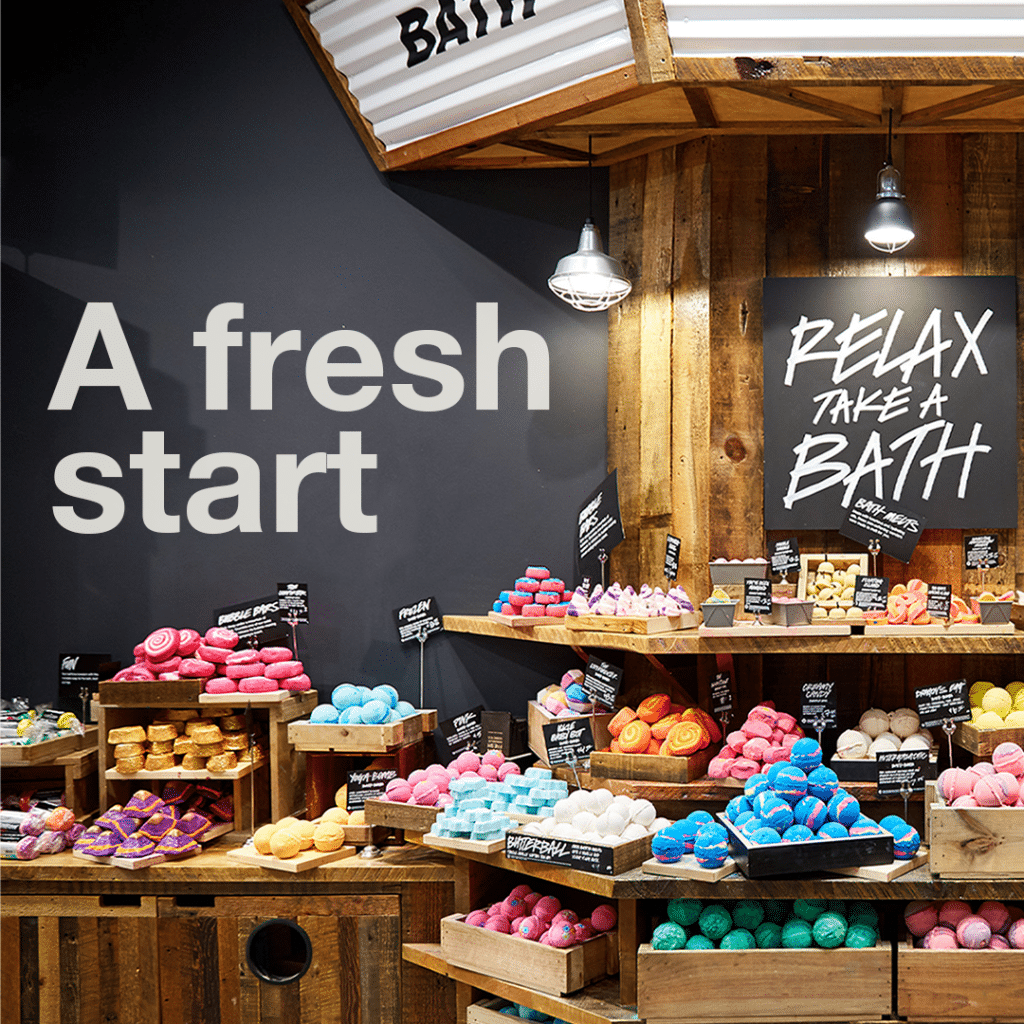
It starts with Lush’s unique brand offering – freshness. Buy from them, and you can expect fresh beauty products. But how do you communicate that value to consumers? That’s where cross-category copying comes in.
To execute on freshness, Lush borrowed cues from food and grocery, where freshness is category table stakes.
Lush designed its in-store layout, packaging, and even signature store scent to imitate a grocer or farmer’s market. The brand is even described as having a “deli-style” approach to cosmetics, allowing shoppers to sample products and purchase them by weight.

The genius of cross-category copying is that it taps into something already established in consumers’ minds. Lush hijacks existing mental models around “freshness” by copying food industry cues. The grocery aesthetic does all of the heavy lifting to communicate the brand’s desired message in a novel category like cosmetics.
Another example shared was from Tesla, which creates an Apple store-like experience in its showrooms to push an innovative brand image. What are other examples of brands that you can think of that have taken inspiration from an out-of-context category or industry? What are brands that you think could benefit from such an approach?