
The business of looking back
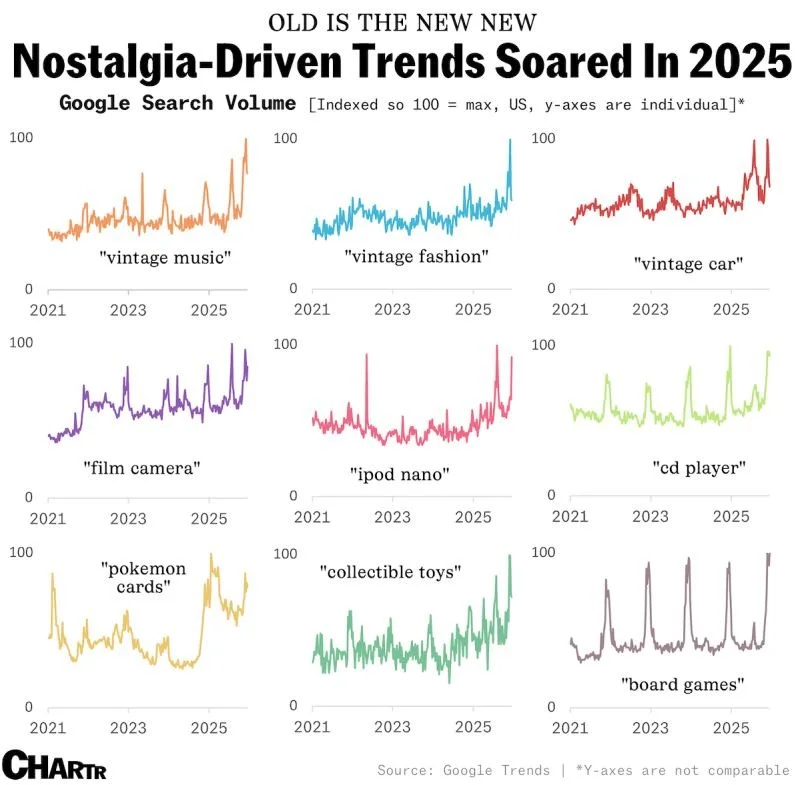
Two of the biggest holiday gift hits in our home were (for our teenage daughter) a Polaroid camera and (for me) a coffee-table book about the 1912 baseball season.
As Ben Foster from the SEO Group in the UK writes on LinkedIn, nostalgia is having a moment. And often it's a specific kind of nostalgia, too—anemoia, which is a longing for a time we have never experienced.
Taco Bell has brought back an Ed Hardy-Y2K menu.
Motorola's Razr flip phone is hot again.
Stranger Things is built around a 1980s retro vibe.
Chuck E. Cheese is appealing to both sentimental Gen Xers and today's kids with Chuck's Arcade, a brand extension that features retro games like Ms. Pac-Man and Donkey Kong.
This all sounds harmless, in a way. There is nothing new about nostalgia. It's cyclical, seemingly inevitable, and often comforting.
However, today's nostalgia seems to harbor darker undertones. As discussed in Forbes, nostalgia sometimes borrows from the past while propelling us into the future. But today's nostalgia often seems more like a retreat, as we get lost in the past to escape a perilous present and an uncertain future. Younger people are unhappy, birth rates are down, who knows how AI will affect us down the road, and we seem to be growing more disconnected from each other.
Also, could technology be encouraging a permanent state of childhood? Is it so convenient to stay connected with our parents and childhood friends that it is easy not to grow up?
This is a weird cultural moment.
Brands (and people, for that matter) need to be moving forward, not just looking back. It doesn't mean nostalgia can't play some role, but nostalgia for nostalgia's sake is often a losing strategy. One wonders what the balance is between glancing in the rear-view, while still looking forward and innovating.