
Is David becoming a Goliath?
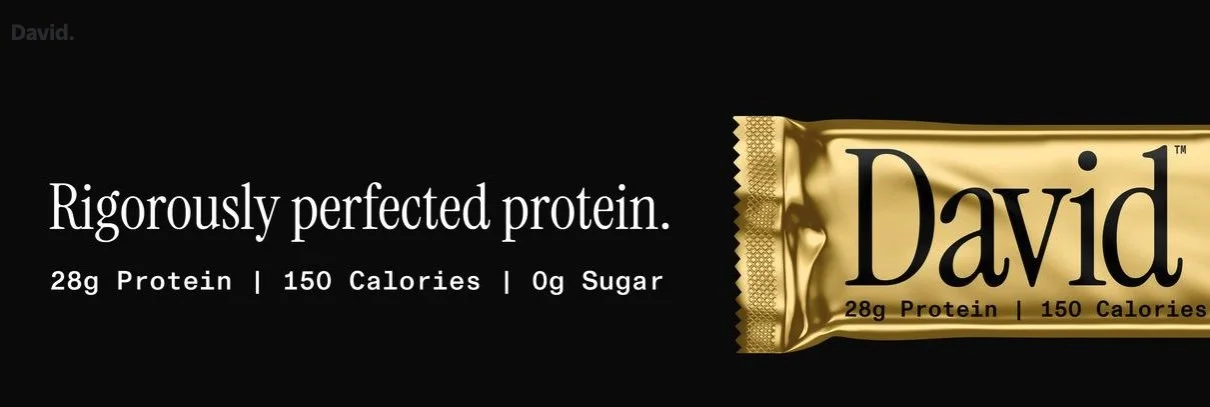
One of the year’s hottest new brands is David Bars, from David Protein. Protein is big, especially with Gen Z, and David offers more proteinthan a typical protein bar (28 grams) with notably fewer calories (150 per serving).
All sorts of interesting marketing tactics at work here:
These bars are relatively expensive, but the packaging supports that price point. No bold colors or splashy fonts or graphics—just a shiny gold wrapper with a minimalist typeface.
“David” refers to Michelangelo’s David, an image of perfection that fits the brand’s upper-crust, intelligent persona.
David Protein sells nine different flavors of bars—plus frozen cod. Pretty weird. But the introduction of cod presumably demonstrates the brand’s commitment to its calorie-to-protein ratio.
They made great use of the scarcity principle, building a 100,000-person waitlist for the product and giving away 5,000 sample packs to generate social media buzz.
Not everyone is in love with David Bars. One nutritionist argues that the protein content is more hype than substance. And some consumers are boycotting David because it acquired Epogee, the sole manufacturer of a low-calorie fat substitute that the company subsequently stopped offering to other brands.
Nevertheless, David has successfully found white space in an increasingly crowded category, both at the attribute level and through a distinct brand persona.