
How can market research predict the future?
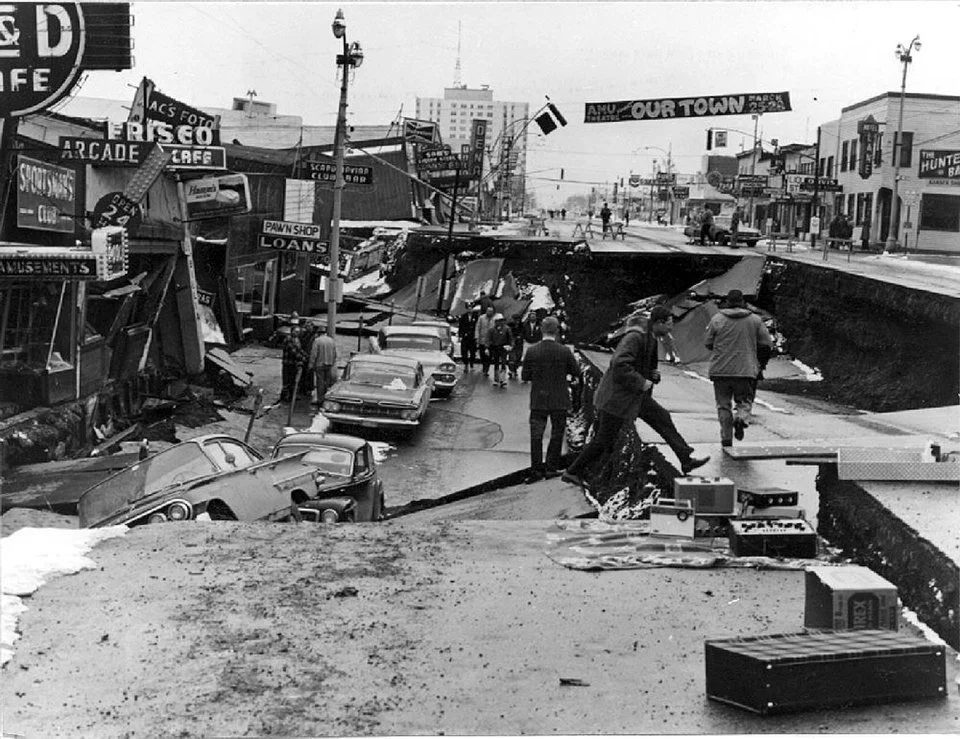
The Great Alaska Earthquake of 1964 reveals an interesting insight into human behavior and also holds a lesson about the perils of asking people to predict future behavior. (There is a market research thought experiment at the end of this.)
A team of sociologists descended on Anchorage following the quake to study people’s behavior. Prior to this, it was widely assumed that in the wake of a mass disaster, chaos would ensue – looting, violence, every person for themselves.
This is not what happened in Alaska. Instead, there was a spirit of neighbor helping neighbor and even a strange form joy that emerged from this sense of connection with people who were suffering and recovering in the same way you were.
As it turns out, this happens everywhere following a disaster. There is very little looting (lots of fear of looting, but little actual looting), little violence, and lots of community and resilience.
One hallmark of these tragedies is so-called “emergent groups” that form spontaneously to help. For example, teams of civilians who called themselves “moles” helped dig out survivors following a quake in Mexico City in 1985. The “Cajun Navy,” a group of private boat owners, rescued thousand following hurricane Katrina. New Yorkers did what they could to help after 9/11.
In market research, we often want to know what will happen in the future if we introduce this new product or service, or how people will behave if their hear a particular advertising message. But asking people directly, “What will you do if X happens?” isn’t the best approach, particularly if people have no experience with, or frame of reference for, that hypothetical future event.
I wonder…if we went back in time and didn’t know anything about post-disaster behavior and, say, the Red Cross asked us for a study that would help them predict post-disaster behavior, what would the research question be? How would we get past people’s instinct that everything will fall apart and get clues that would reveal the truth, which is that we all come together.